
Sales Operations Services
Sales Operations is often where RevOps improvements begin – and make up 3 of the Top Six RevOps Challenges. The rapid growth typical of many Start-up / Series A companies pushes the limits of the systems that were put in place at the start.
Pipeline quality
The volume of Opportunites combined with a general lack of sales methodology means the Pipeline fills with low quality deals, which are pushed from month to month and Rep to Rep without ever advancing.
This inflates the Pipeline Multiplier vs Target which is very reassuring until you start missing those Targets.
RevOps can help by adding Scores to each Opportunity, which can then roll up into a Pipeline Quality KPI to provide an early warning of any Reps, Territories or Products at risk of missing their number.
Sales Methodology
A big part of the Quality metric comes from agreeing and enforcing a consistent standard for Leads and Opportunities. Whether you choose MEDDIC or MEDDPICC or any other methodology, it needs to be reflected in the CRM.
RevOps must not only ensure that Sales Stages mirror the methodology, but the Stages should also guide what actions can be taken to progress an Opportunity; a classic example is not being able to provide a pricing before you understand the buyer’s needs.
The Sales Stages also provides two other KPIs to help make performance more predictable:
- Opportunity Weighting – as each Opportunity has a % weighting derived from the Stage you can measure Weighted Pipeline : Total Pipeline. If your Weighted Pipeline is a small fraction of your Total Pipeline your risk is high. If you hit Target despite that risk you probably have a culture of ‘sandbagging’, which has other consequences.
- Time in Stage – measuring the time Opportunities stay in each Stage can reveal a lot about your sales cycle and your salespeople.
Forecasting
As your organisation grows you need to move from treating forecasting as an Art to a Science. This usually means abandoning spreadsheets (no matter how clever!) and the endless forecast meetings required to maintain them.
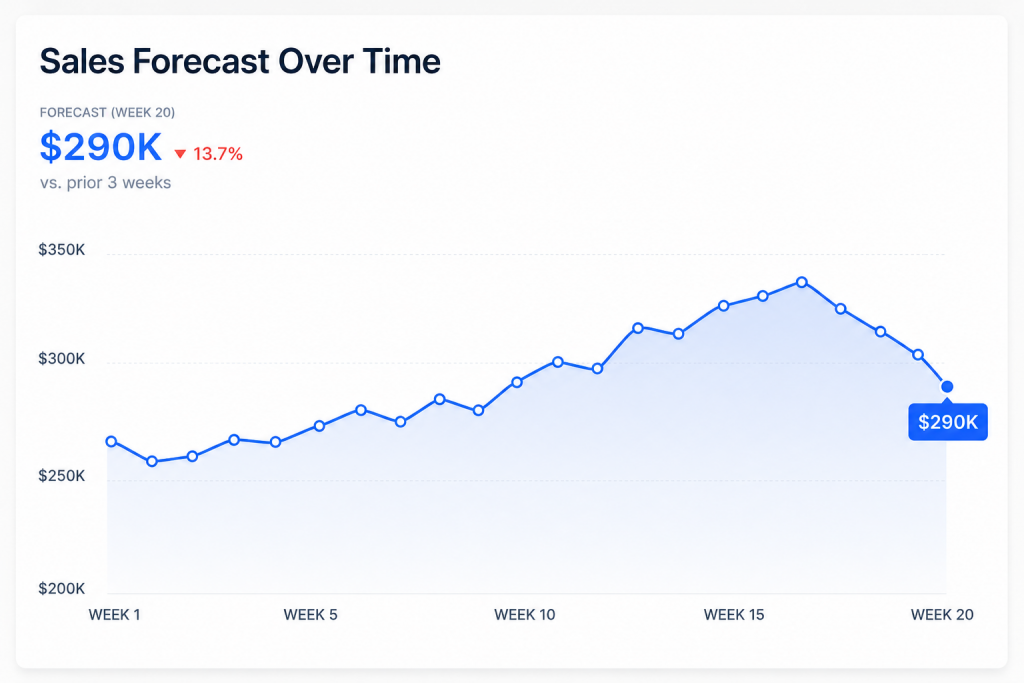
Once you have good pipeline discipline the sales forecast should flow directly from the CRM. CRM Forecasting can be a bit quirky and might impose some restrictions, but wherever possible you should use it; the benefits are substantial
- One Number – it is hard to overstate the importance of this. So many companies waste a huge amount of time and energy because everyone has their own version of The Number.
- Pipeline control – the act of Forecasting based on Pipeline makes maintenance of the pipeline part of each Reps routine.
- Time saved – the effort involved in maintaining a separate forecasting spreadsheet is enormous, often taking days for the number to be collated. And the moment that is done it is out of date.
- Re-focus on growth activities – we often find that Sales Managers are able to invest the time saved in discussing Forecasts with their team into more valuable coaching such as pipeline creation strategies
- Improved accuracy through historical trends – when your forecast is being recorded in the CRM it becomes possible to see how it varies over time vs the actual result. For example you might see that the Pipeline inflates by 25% at the start of the quarter before new opportunities are properly qualified, or loses 15% in the last 2 weeks of the quarter.